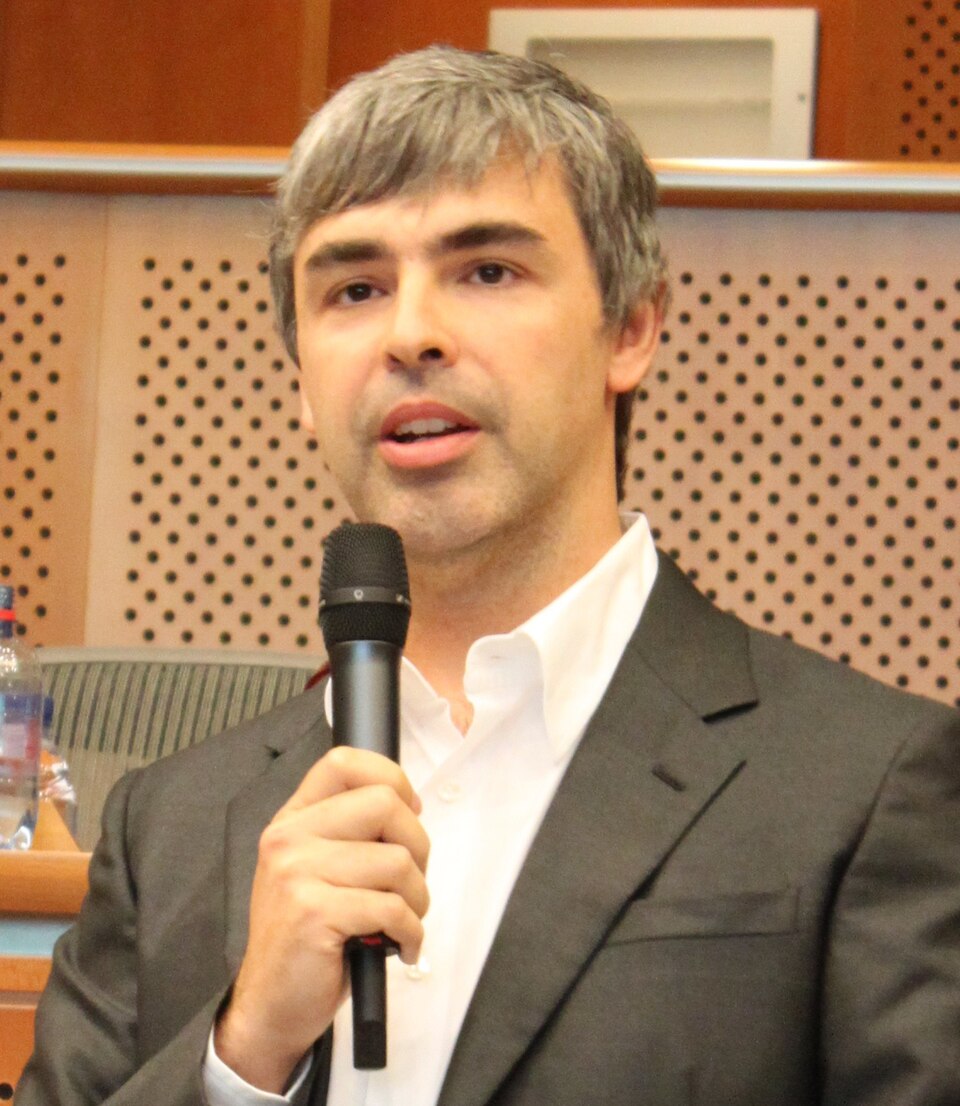
Larry Page, a name synonymous with innovation and digital transformation, stands as the visionary co-founder who architected Google into a global tech empire. Born into a family steeped in the nascent world of computer science, Page's journey from a curious child in Michigan to a titan of Silicon Valley is a testament to his groundbreaking vision and relentless drive to organize the world's information.
His work didn't just create a successful company; it fundamentally reshaped how we access knowledge, connect with each other, and interact with the digital realm. From pioneering a revolutionary search algorithm to steering Google's expansion into diverse technological frontiers, Larry Page's influence is etched into the fabric of modern society.
Early Life and Formative Influences: Nurturing a Tech Prodigy
Born on March 26, 1973, in East Lansing, Michigan, Larry Page’s destiny seemed preordained by his environment. His father, Carl Page, was a respected pioneer in artificial intelligence and computer science, while his mother, Gloria, was a computer programming instructor. This unique household was less a home and more a living laboratory, filled with computers, technological magazines, and intellectual discussions that ignited Page's passion for invention from a remarkably young age.
This early immersion provided a fertile ground for his intellectual curiosity. It wasn't just about passive exposure; it was an active engagement with the tools and concepts that would define his future. The Pages enrolled Larry in a Montessori school, an educational approach renowned for fostering independence, self-motivation, and creative thinking. This experience proved profoundly influential. Page himself has credited this "training of not following rules and orders, and being self-motivated and questioning what’s going on in the world" as a critical factor in shaping his unique attitude and work ethic. This foundation in independent thought and a willingness to challenge established norms would become a hallmark of his approach to problem-solving and innovation throughout his career, preparing him to disrupt entire industries.
Stanford, Sergey, and the Birth of a Search Revolution
Page’s academic journey further cemented his technical prowess. He earned a Bachelor of Science degree in engineering from the University of Michigan, laying a strong foundation in complex systems and problem-solving. His quest for deeper knowledge led him to Stanford University, where he enrolled in a graduate program focused on computer engineering. It was within the hallowed halls of Stanford that destiny intervened, bringing him together with Sergey Brin, a fellow graduate student whose intellectual curiosity mirrored his own.
The synergy between Page and Brin was immediate and profound. Their collaborative spirit fueled a groundbreaking research project that aimed to solve a fundamental challenge of the burgeoning internet: how to effectively organize and retrieve its ever-growing volume of information. Prior search engines often ranked pages based on the frequency of keywords, leading to often irrelevant or low-quality results. Page and Brin, however, conceptualized a novel approach, a search engine designed to catalog web pages based on their popularity and link structure. They posited that the most frequently linked-to pages were inherently the most useful and authoritative.
This innovative concept, which would later evolve into the famous PageRank algorithm, represented a monumental paradigm shift. It moved beyond simple keyword matching to evaluate the qualitative value of web pages, mirroring how academic citations signify importance. This ingenious system formed the core of Google, which officially launched in 1998 from a garage in Menlo Park, California. The creation of Google, driven by Larry Page's visionary approach to information retrieval, didn't just offer a better search engine; it redefined how information is accessed and organized on the internet, making it profoundly impactful.
Scaling a Global Empire: Leadership and Vision at Google and Alphabet
Following Google's launch, Larry Page played an indispensable role in steering its rapid growth and evolution. Serving initially as CEO, he was instrumental in transforming Google from a promising startup into a technological powerhouse. Under his leadership, Google didn't just dominate search; it dramatically expanded its offerings, venturing into email (Gmail), mapping (Google Maps), web browsers (Chrome), and mobile operating systems (Android), fundamentally shaping the digital landscape.
A landmark moment in Google's expansion came in 2006 with the strategic acquisition of YouTube for $1.65 billion. This move was not just about adding a video platform; it was about recognizing the future of content consumption and cementing Google's presence in a critical emerging market. Page's vision helped steer the company towards becoming a true technology conglomerate, with extensive ventures spanning various sectors far beyond its initial search roots.
In 2015, in a move that showcased Page’s long-term strategic thinking, Google underwent a major restructuring, forming Alphabet Inc. as a parent company. This reorganization allowed Google's core internet services to remain focused, while enabling ambitious "moonshot" projects and other diverse subsidiaries (like Waymo for self-driving cars and Verily for life sciences) to operate independently under the Alphabet umbrella. As CEO of Alphabet, Page provided overarching strategic guidance, fostering innovation and allocating resources across this vast portfolio. This structure allowed for greater transparency, accountability, and the ability to pursue bold, futuristic endeavors without distracting from Google's core business. The scale of Larry Page's journey from humble beginnings to leading such a massive organization is truly remarkable.
Although he stepped down from day-to-day operational roles as CEO of Alphabet in 2019, Page remains one of the largest shareholders and continues to exert significant influence on the strategic direction of Alphabet and its numerous subsidiaries. His leadership style, characterized by a focus on bold ideas, engineering excellence, and a willingness to take calculated risks, has left an indelible mark on the company's culture and trajectory.
The Legacy of Larry Page: Shaping the Digital Future
The impact of Larry Page on the internet and technology is immeasurable. He didn't just build a company; he built a platform that democratized information access on a global scale. Google's pervasive influence is now woven into the fabric of daily life, from seeking answers to navigating unfamiliar cities, and from communicating with loved ones to entertaining ourselves with vast video content.
His vision for organizing the world's information and making it universally accessible and useful remains a guiding principle for one of the planet's most influential corporations. Page’s engineering mindset, coupled with his entrepreneurial spirit, provided a blueprint for how to build and scale a tech giant while continuously pushing the boundaries of what's possible.
For aspiring entrepreneurs and innovators, Larry Page's journey offers several invaluable lessons:
- Embrace Foundational Knowledge: His strong background in computer engineering at Michigan and Stanford was crucial to developing groundbreaking algorithms.
- Seek Synergistic Partnerships: The collaboration with Sergey Brin highlights the power of complementary skills and shared vision.
- Question the Status Quo: His Montessori education instilled a spirit of inquiry and a willingness to challenge existing norms, leading to revolutionary ideas.
- Think Big, Aim for Moonshots: Page consistently encouraged audacious goals, not just incremental improvements, evident in Google's diverse ventures under Alphabet.
- Adapt and Evolve: From a single search engine to a sprawling conglomerate, Page demonstrated an ability to strategically pivot and expand, ensuring long-term relevance.
Larry Page’s legacy extends beyond Google's products; it lies in the culture of innovation he fostered, the talent he attracted, and the foundational infrastructure he helped create for the digital age. He has empowered billions with information and connectivity, making him a true architect of the global tech empire we experience today.
In conclusion, Larry Page stands as one of the most transformative figures in modern technology. His relentless pursuit of organizing information, combined with his visionary leadership and strategic acumen, not only built Google into an unparalleled global powerhouse but also irrevocably shaped the digital world. While he may have stepped back from day-to-day operations, his foundational impact and strategic influence as a major shareholder ensure that his vision continues to guide Alphabet and its subsidiaries into the future, cementing his status as an enduring titan of the tech industry.