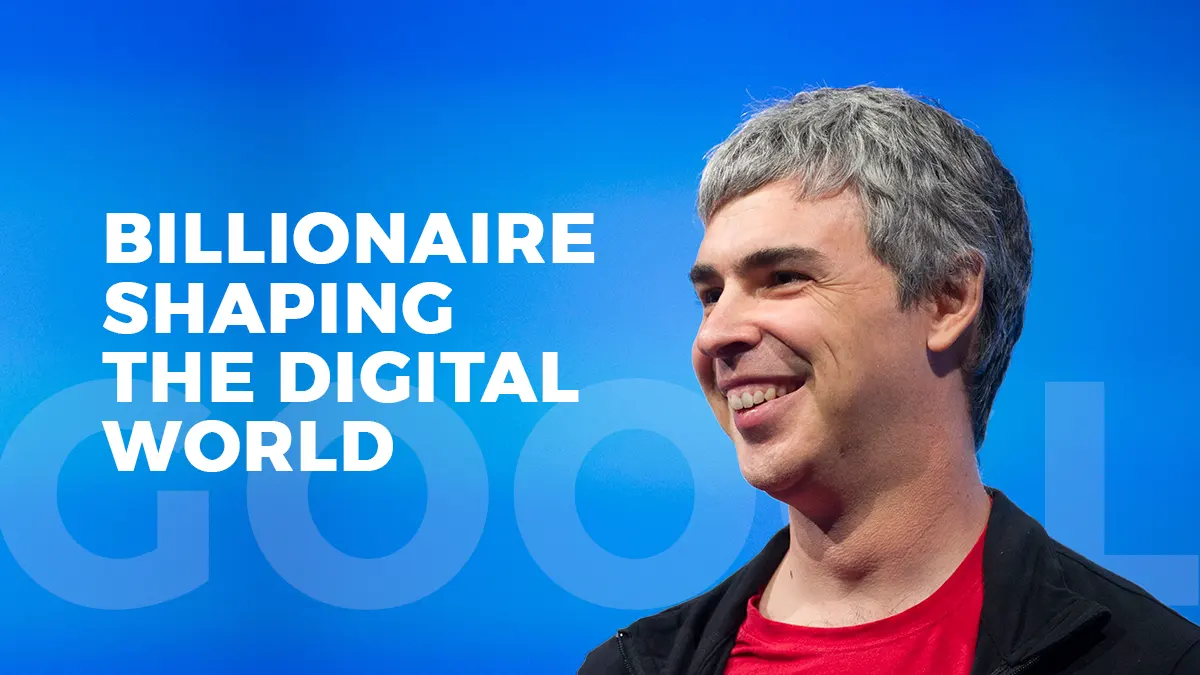
In the annals of technological innovation, few names shine as brightly as Larry Page. Co-founder of Google, a company that fundamentally reshaped how we access information and interact with the digital world, Page's journey is a compelling narrative of vision, determination, and groundbreaking engineering. From his formative years steeped in computer science to leading one of the world's most influential corporations, Larry Page's journey from Michigan roots to tech giant epitomizes the entrepreneurial spirit that defines Silicon Valley.
The Early Spark: A Childhood Steeped in Innovation
Born on March 26, 1973, in East Lansing, Michigan, Larry Page was destined for a life intertwined with technology. His upbringing was anything but conventional, unfolding within a household that could accurately be described as a crucible of computing. His father, Carl Page, was a pioneering figure in computer science and artificial intelligence, while his mother contributed her expertise as a computer programming instructor. This unique environment meant that personal computers, tech magazines, and nascent technological discussions were commonplace, igniting Page's passion for innovation from a very young age.
This early immersion wasn't just about exposure; it was about fostering a particular mindset. Page attended a Montessori school, an educational approach renowned for encouraging independence, self-motivation, and creative problem-solving. He himself credits this unconventional schooling with instilling in him "that training of not following rules and orders, and being self-motivated and questioning what’s going on in the world." This foundational philosophy would later prove critical in his audacious approach to challenging existing paradigms in the search engine industry and beyond, underscoring how early educational experiences can profoundly shape a visionary's path.
From Michigan to Stanford: The Genesis of a Revolution
Larry Page's academic trajectory further honed his burgeoning skills and intellectual curiosity. He pursued a Bachelor of Science degree in engineering from the prestigious University of Michigan, laying a robust technical groundwork for his future endeavors. His thirst for knowledge then led him to Stanford University, a hotbed of technological research and development, where he enrolled in a graduate program focused on computer engineering.
It was at Stanford where the stars aligned for Page. He met Sergey Brin, a fellow graduate student who shared his intellectual intensity and fascination with data and large-scale information systems. Their collaboration began with a research project that would ultimately redefine the internet. Dissatisfied with the existing search engines that often prioritized the number of times a search term appeared on a page, Page and Brin theorized a new system. They believed that the most valuable and authoritative web pages were those most frequently linked to by other reputable pages – essentially, a citation-based ranking system for the web. This revolutionary concept, which they initially dubbed "BackRub" and later evolved into the sophisticated PageRank algorithm, formed the core of their nascent search engine. It was an audacious idea, born from academic rigor and a relentless pursuit of better information organization, and it was this innovation that would launch Google in 1998, changing how the world accessed information forever.
Building an Empire: Google's Ascendance Under Larry Page's Leadership
With the formal incorporation of Google in 1998, Larry Page embarked on a remarkable journey of corporate leadership. As CEO, he steered the company through its critical foundational years, transforming it from a promising startup into an internet behemoth. His leadership style, characterized by a bold vision and an insistence on tackling "big problems," became a cornerstone of Google's culture. Page’s unwavering commitment to innovation saw Google continuously expand its services beyond core search, venturing into advertising, mobile operating systems, cloud computing, and more.
A notable milestone under his tenure was the strategic acquisition of YouTube in 2006 for $1.65 billion. This move was not just an expansion; it was a prescient recognition of the burgeoning power of video content and social media. YouTube rapidly became a dominant force in online media, demonstrating Page's ability to identify and integrate groundbreaking technologies that would define future digital landscapes. Later, in 2015, Page orchestrated another pivotal restructuring, leading the creation of Alphabet Inc. as Google's parent company. This move allowed Google's myriad ventures, from self-driving cars (Waymo) to life sciences (Verily), to operate with greater autonomy while still benefiting from shared resources and Page's overarching strategic direction. This transformation solidified Larry Page: architect of Google's global tech empire, creating a diversified technology conglomerate designed for long-term impact across multiple sectors.
The Impact of PageRank and Google's Vision
The ingenuity of PageRank cannot be overstated. By prioritizing quality and relevance over keyword stuffing, it fundamentally improved the user experience of the internet. Before Google, finding reliable information online could be a frustrating, often fruitless endeavor. Larry Page's vision delivered an elegant solution that not only organized the world's information but also made it universally accessible and useful. This commitment to user utility became a defining characteristic of Google's product development and set a new standard for online services. To this day, the principles embedded in PageRank – relevance, authority, and user experience – remain critical factors for anyone looking to achieve visibility online, whether through SEO strategies or content creation.
- Focus on Authority: Understanding that links from credible sources enhance a page's authority is crucial for digital marketers.
- User Experience is Paramount: A core Google principle from the start, a positive UX encourages engagement and return visits.
- Innovation as a Driver: Page's constant push for "10x thinking" (aiming for ten times improvement, not just 10 percent) inspired a culture of ambitious problem-solving.
Beyond the Helm: Larry Page's Enduring Influence
While Larry Page stepped down from day-to-day operational roles as CEO of Alphabet in 2019, his connection to the tech giant he co-founded remains profound. He continues to be one of Alphabet's largest shareholders, granting him significant influence over the company's strategic direction and long-term vision. This transition allowed Page to potentially focus on other areas of interest, perhaps exploring nascent technologies or philanthropic ventures that align with his lifelong commitment to impactful innovation.
His legacy extends far beyond specific products or acquisitions. Larry Page cultivated a culture of innovation, moonshot thinking, and problem-solving at Google that continues to drive its ambitious projects. From artificial intelligence and quantum computing to renewable energy and life extension, Alphabet companies are tackling some of humanity's most complex challenges, often reflecting the expansive, forward-thinking ethos that Page instilled. His influence serves as a powerful reminder that true leadership involves not just managing current operations, but also envisioning and enabling future possibilities. The world wide web, as we know it today, bears an indelible mark from the architectural brilliance of Larry Page.
Conclusion: A Legacy of Revolutionizing Access to Information
Larry Page stands as a titan of the digital age, a visionary whose early insights and unwavering commitment to innovation transformed a graduate school project into a global phenomenon. His relentless pursuit of a better way to organize the world's information not only gave us Google but also catalyzed an explosion of digital commerce, communication, and connectivity. From a childhood surrounded by computers to orchestrating the expansion of Google into the diversified behemoth that is Alphabet, Page's career is a testament to the power of big ideas and the courage to execute them. His enduring influence, both as a major shareholder and as the architect of a culture of audacious problem-solving, ensures that the principles he pioneered will continue to shape the future of technology for generations to come. Larry Page truly revolutionized our access to information, leaving an unparalleled legacy in the digital landscape.