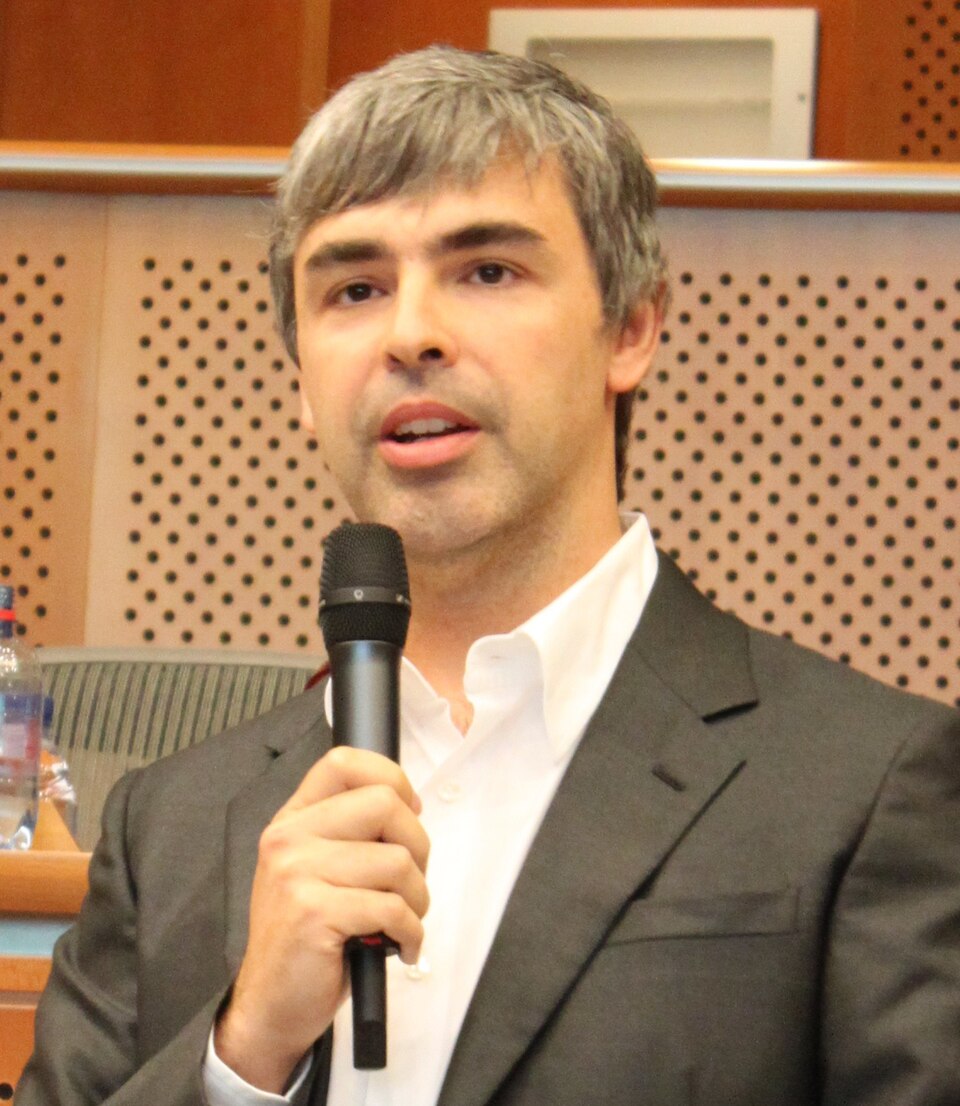
Larry Page's Journey: From Michigan Roots to Tech Giant
In the vast landscape of digital innovation, few names resonate with the same transformative power as Larry Page. Co-founder of Google, a company that fundamentally reshaped how we access information and interact with the digital world, Page's trajectory from a curious child in Michigan to a titan of technology is a testament to visionary thinking, relentless innovation, and an unwavering belief in the power of organized information. Born in 1973, Page didn't just build a search engine; he engineered a revolution, creating an empire that touches nearly every aspect of modern life.
His story is not merely one of technological prowess but also of an environment that nurtured groundbreaking ideas and a spirit that challenged conventional wisdom. From his early days immersed in computing to his pivotal role in steering Google's expansion into a global conglomerate, Larry Page's journey offers profound insights into the genesis and evolution of one of history's most influential companies.
Early Foundations: A Childhood Immersed in Technology and Innovation
Larry Page entered the world on March 26, 1973, in East Lansing, Michigan, into an environment that would prove exceptionally fertile ground for a budding technologist. His upbringing was far from typical; it was a deep dive into the nascent world of computer science. His father, Carl Page, was a revered pioneer in artificial intelligence and a professor, while his mother shared her expertise as a computer programming instructor. This unique household wasn't just filled with books; it was brimming with early computers and a constant flow of tech magazines, offering young Larry an unparalleled, hands-on education in the very tools and concepts that would define his future.
This early immersion wasn't just about exposure; it fostered an innate curiosity and a comfort with complex systems. Imagine a child surrounded by the very machines and ideas that would later become mainstream – this foundational knowledge undeniably laid the groundwork for his future innovations. Beyond the academic influence of his parents, Page's education took another significant turn: he attended a Montessori school. This pedagogical approach, which champions independence, self-motivation, and creative problem-solving over rigid adherence to rules, had a profound impact. Page himself credits this training with shaping his unique attitude, encouraging him to question the status quo and pursue his own interests, rather than simply following orders. This blend of technical immersion and independent thought would become a hallmark of his approach to innovation, proving that sometimes, the greatest breakthroughs come from daring to challenge established norms.
For aspiring innovators, Page's early life offers a valuable lesson: diverse influences, from academic exposure to alternative educational methods, can powerfully shape a visionary's path. Providing children with access to engaging and challenging environments, whether in STEM or creative fields, can ignite a lifelong passion for discovery.
The Stanford Connection: The Birth of a Search Revolution
Page’s academic journey continued to pave the way for his groundbreaking work. After earning a Bachelor of Science degree in engineering from the University of Michigan, he sought further knowledge, enrolling in a graduate program focused on computer engineering at Stanford University. It was within the vibrant, intellectually stimulating atmosphere of Stanford that fate, and a shared passion for information organization, brought him together with Sergey Brin, another brilliant graduate student. The synergy between Larry Page and Brin was immediate and profound, setting the stage for one of the most significant collaborations in modern history.
Their joint research project, initially dubbed "BackRub," aimed to address a critical flaw in the early internet: the inefficiency of existing search engines. Most search engines at the time indexed pages primarily based on keyword density, which often led to irrelevant or low-quality results. Page and Brin, however, envisioned a radically different approach. They theorized that the most valuable web pages were likely those that were most frequently linked to by other reputable pages, essentially treating links as "votes" of importance. This innovative concept led to the development of PageRank, an algorithm that would forever change how information is accessed and organized on the internet.
PageRank was a revolutionary idea because it introduced a hierarchical structure to the web, much like academic citations, where the importance of a document is often judged by how many other important documents reference it. This ingenious system, prioritizing pages based on popularity and authority rather than mere keyword presence, fundamentally redefined search functionality. It transformed the chaotic sprawl of the internet into a navigable, organized repository of knowledge, providing users with exponentially more relevant and useful results. This commitment to user experience and the pursuit of superior information retrieval quickly set their project apart, laying the foundation for what would become Google.
Building an Empire: From Garage Startup to Global Conglomerate
With their groundbreaking algorithm in hand, Larry Page and Sergey Brin officially incorporated Google in September 1998. What began as a research project operating out of a Stanford dorm room and later a garage in Menlo Park, California, rapidly evolved into a global phenomenon. Page, initially serving as CEO, played an instrumental role in guiding the company through its explosive growth phase. His vision wasn't just about making a better search engine; it was about organizing the world's information and making it universally accessible and useful.
Under Page's leadership, Google's offerings expanded far beyond its core search product. The company went public in 2004, a landmark event that underscored its immense value and potential. A pivotal moment in Google's expansion strategy was the acquisition of YouTube in 2006 for $1.65 billion. This strategic move brought a dominant video-sharing platform under Google's umbrella, diversifying its content offerings and cementing its position in the burgeoning digital media landscape. This wasn't merely a purchase; it was a foresightful investment into the future of online content consumption, demonstrating Page's ability to identify and integrate key technologies that would complement and enhance Google's ecosystem.
Page's entrepreneurial drive saw Google venture into countless other sectors, from mobile operating systems (Android) and web browsers (Chrome) to cloud computing, artificial intelligence, and autonomous vehicles. His tenure as CEO was characterized by a bold willingness to pursue "moonshot" projects, often with long-term payoffs, pushing the boundaries of what technology could achieve. This expansive vision transformed Google from a search engine company into a technology conglomerate, profoundly impacting everything from how we communicate to how we travel. For any business looking to scale, Google's story under Page highlights the critical importance of continuous innovation, strategic diversification, and a long-term perspective on growth.
Alphabet and Beyond: Steering the Future of Tech
As Google continued to grow and diversify, Larry Page recognized the need for a new organizational structure to manage its vast and varied ventures. In 2015, he orchestrated the creation of Alphabet Inc., a holding company designed to encompass Google's core businesses while allowing its more ambitious, forward-thinking projects (often dubbed "other bets") to operate with greater autonomy. Page transitioned from CEO of Google to CEO of Alphabet, a move that allowed him to focus on the overarching strategy, innovation, and long-term vision for the entire conglomerate, delegating the day-to-day operations of Google to Sundar Pichai. This restructuring was a masterstroke in corporate governance, providing transparency for investors and allowing individual segments to thrive without being overshadowed by the core search business.
Under his leadership at Alphabet, the company continued its trajectory of investing in groundbreaking technologies, from life sciences (Calico) to smart home devices (Nest) and advanced robotics. Page consistently pushed the envelope, encouraging research and development that could potentially redefine entire industries. While he stepped down from his day-to-day operational roles at Alphabet in 2019, handing the reins to Sundar Pichai, his influence remains indelible. He continues to be one of Alphabet's largest shareholders and a member of its board, retaining significant sway over the strategic direction of the company and its numerous subsidiaries. His transition signifies not an exit, but a shift towards a more advisory and visionary capacity, allowing him to focus on big-picture ideas and mentor future leaders.
Larry Page's journey demonstrates a continuous evolution of leadership, from hands-on founder to strategic architect of a diversified tech empire. His ability to adapt his role as the company scaled, culminating in the creation of Alphabet, underscores his strategic brilliance in managing complexity and fostering long-term innovation. For deeper insights into this organizational marvel, explore Larry Page: Architect of Google's Global Tech Empire.
Larry Page's Enduring Legacy and Vision
The impact of Larry Page on the modern world is immeasurable. From a simple search query to navigating our commutes, consuming media, and even exploring space, the technologies pioneered or propelled by Google have become indispensable to billions. His vision for organizing information, democratizing access to knowledge, and fostering an environment of audacious innovation has left an indelible mark on the tech industry and society at large.
Page's legacy is defined by several key principles: a relentless pursuit of innovation, a willingness to take calculated risks on "moonshot" projects, and a deep-seated belief in the power of technology to solve complex problems and improve human lives. His ability to envision the future of information and then systematically build the tools to realize that vision has set a precedent for aspiring entrepreneurs and established tech giants alike. He taught us that true leadership isn't just about managing what exists, but about imagining what could be.
For those looking to make a similar impact, Page's career offers actionable advice: cultivate a strong collaborative spirit, as seen with Brin; don't shy away from challenging conventional wisdom; and always prioritize user value. His unwavering focus on delivering the most relevant information ultimately made Google the dominant force it is today. His journey reminds us that the greatest innovations often emerge from a combination of intellectual curiosity, rigorous engineering, and a bold vision for a better future.
In conclusion, Larry Page's journey from a childhood steeped in technology in East Lansing, Michigan, to co-founding and leading one of the world's most influential companies, Google, is a narrative of extraordinary vision and relentless innovation. His collaborative spirit, embodied in his partnership with Sergey Brin, led to the revolutionary PageRank algorithm that transformed internet search. Through strategic acquisitions like YouTube and the ambitious restructuring into Alphabet, Page consistently pushed the boundaries of what technology could achieve, leaving an enduring legacy that continues to shape our digital lives and inspires future generations of technologists and entrepreneurs.